Case Study • FinTech • Digital Banking • Cryptocurrency

Automated Multi-Source Reconciliation for a Bitcoin Banking Pioneer

Xapo, the company behind one of the best-known Bitcoin wallets and debit cards, was growing faster than its operations could handle.
Software Architecture & Development Reconciliation Engine Back-End, Front-End AWS Cloud Infrastructure
client: XAPO Sep 2026
Partnership: Competitive Vendor Selection → Project Delivery → Long-Term Staff Augmentation
Xapo Bank reconciliation analytics dashboard
2 Weeks
Competitive vendor assessment
4 Phases
From prototype to delivery
3 Experts
Senior Engineering Team
Long-Term
Staff Augmentation
~0
Manual tagging remaining
Near-complete elimination.
~0
Manual tagging remaining
Near-complete elimination.
~0
Manual tagging remaining
Near-complete elimination.
Xapo Bank

As Xapo grew from a Bitcoin wallet into a broader FinTech platform, manual reconciliation became a bottleneck across its banking, crypto, and payment operations. AccelOne designed and built a modular reconciliation engine that automated transaction matching and validation across multiple data sources, without tying future growth to a growing web of point-to-point integrations.

Built around a data-driven architecture, the engine could add new banks, exchanges, payment networks, and transaction types through configuration rather than changes to the core system. Delivered on time and within budget, the platform gave Xapo the scalability to expand beyond Bitcoin while freeing internal teams from repetitive reconciliation work.

The project also became the foundation for a long-term partnership, with Xapo retaining the original AccelOne team through a staff augmentation engagement to preserve the architectural knowledge behind the platform.

Challenge

Xapo, the company behind one of the best-known Bitcoin wallets and debit cards, was growing faster than its operations could handle. Human operators reconciled transactions across banks, crypto exchanges, and payment networks using internal tools. That process worked for a startup but couldn't keep up with rapid customer growth.

The stakes went beyond efficiency. Xapo was moving from a niche crypto wallet to a full FinTech platform supporting multiple cryptocurrencies, and manual reconciliation stood in the way. It needed an automated, modular engine that could connect banking and crypto services, scale with volume, and add new data sources without a rebuild, so its teams could focus on strategic work.

Search and tagging had become a serious bottleneck

With millions of videos, search and tagging had become a serious bottleneck.

challenge 01

Manual tagging didn't scale

Description here.

challenge 01

Manual tagging didn't scale

Description here.

challenge 01

Manual tagging didn't scale

Description here.

challenge 01

Manual tagging didn't scale

Description here.

The Hard Problems

01

Problem title

Problem description.

02

Problem title

Problem description.

03

Problem title

Problem description.

A hybrid AI video intelligence pipeline built for scale

Description here.

Key Impact: Cost Reduction by Three Orders of Magnitude

One of the most significant achievements of this engagement was the reduction of AI processing costs by three orders of magnitude.

By combining on-premises transcription models with selective use of commercial APIs, AccelOne designed a hybrid architecture that:

01

Card Title

Card description.

01

Card Title

Card description.

01

Card Title

Card description.

The result was not just faster delivery, but stronger alignment around how

Monetate builds and evolves its platform.

Core 01

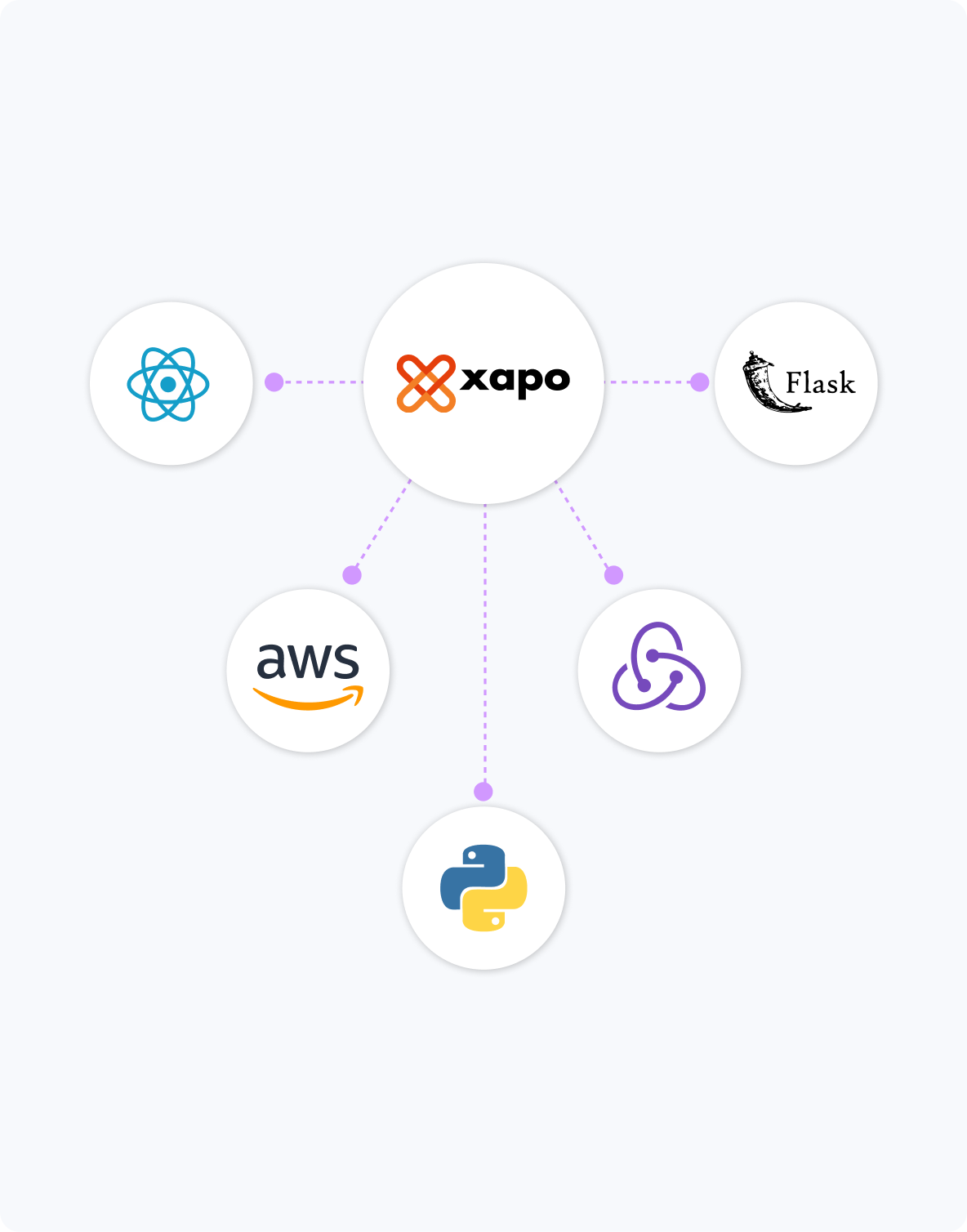
Front End: A single-page application built with React.js and Redux

React.js
Core 02

Back End: Python with Flask, exposing a REST API layer through Flask-RESTful

Rest API
Core 03

Processing Engine: APScheduler orchestrating automated transaction flows and reconciliation runs

Automation
Core 04

Cloud & Data: AWS, with Docker containers orchestrated on Amazon ECS, encrypted storage on Amazon S3, and MongoDB and MySQL data stores


Data Store
Xapo Bank app notification: BTC earned

Open-source intelligence, cloud applied selectively

The pipeline combines open-source models with selective cloud services, running primarily on on-prem GPU infrastructure to deliver production-grade accuracy while avoiding cost, lock-in, and unpredictability.

Tech name

Description

Open Source

Tech name

Description

Open Source

Tech name

Description

Open Source

Tech name

Description

Open Source

This hybrid approach delivers production-grade accuracy while avoiding the cost, lock-in, and unpredictability of cloud-only architectures — making large-scale video intelligence economically sustainable at 2.5M+ video scale.

AI-powered video intelligence at massive scale

A searchable, time-addressable catalogue spanning millions of hours

What was previously locked behind sparse tagging and manual review is now discoverable at scale — while balancing cost efficiency with production-grade reliability.

before

Hours per batch of manual tagging

Hours per batch of manual tagging

Hours per batch of manual tagging

Hours per batch of manual tagging

after

Minutes of spot-check per batch

Minutes of spot-check per batch

Minutes of spot-check per batch

Minutes of spot-check per batch

The catalogue is now discoverable by:

Title

Description

Title

Description

Title

Description

Title

Description

Engineering Highlights

Senior expertise and close CTO collaboration

A compact senior team (one Senior Solution Architect and two Senior Enterprise Python Developers) delivered the engine in four phases. They worked in daily coordination with Xapo's CTO to keep architecture aligned with the business model.

Validating reconciliation logic before development

The team first immersed itself in Xapo's tools, practices, and stakeholders. Before writing production code, AccelOne built a prototype to define the reconciliation logic and rules and to test edge cases. Full development began only after the prototype was validated, and that became the turning point of the project: it proved a data-driven model could handle complex financial logic now and new transaction types later.

Modular architecture and secure delivery

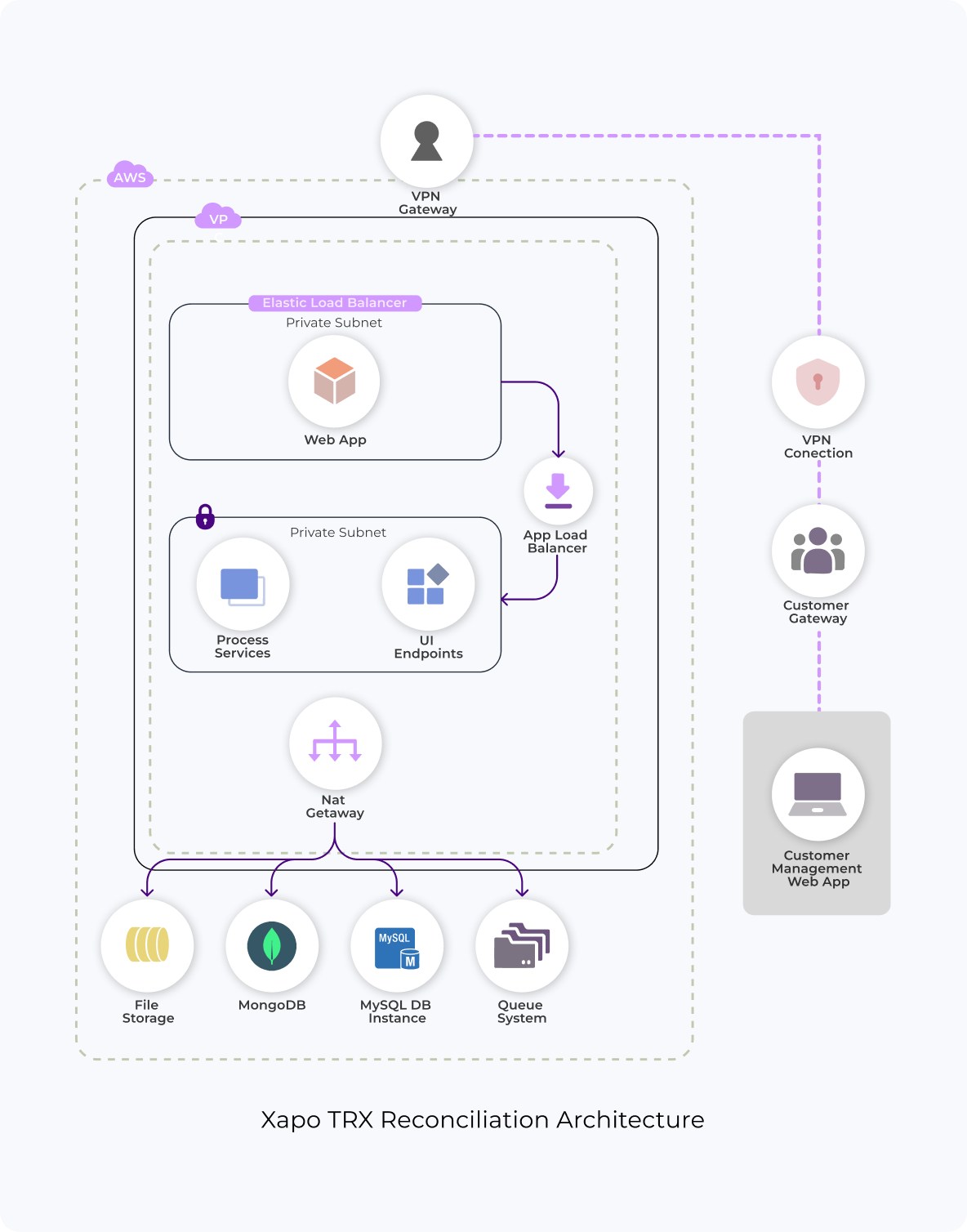
Development ran on Scrum. Integrations with banks, payment networks, and exchanges were built as independent modules, so each could change without disrupting the core engine. The platform runs on AWS inside a virtual private cloud, with services isolated in private subnets behind load balancers, VPN access to Xapo's customer management tools, and encrypted data at rest. Separate development, staging, and production environments kept testing controlled before rollout.

Expanding the Partnership

As the early AI and UI initiatives gained traction, the collaboration expanded. AccelOne is now contributing not only to delivery, but to roadmap planning across AI, machine learning, and user experience initiatives.

Austin describes the ongoing dialogue as productive and forward-looking:

"As we work through these initial projects, having the teams weigh in on what the roadmap should look like next has been very productive. We've gained a great set of partners and feedback voices inside of AccelOne."

The partnership now operates at two levels:

  1. Accelerating current initiatives
  2. Accelerating current initiatives

For a platform operating at this level of complexity, that alignment matters.

A Model Built on Leverage and Trust

Monetate's goal was simple: Accelerate AI and UI initiatives without slowing the organization down.

What ultimately emerged was a partnership that increased leverage across the entire business.

Senior engineers were embedded quickly. Roadmaps moved faster. AI became part of daily workflows. Collaboration tightened across teams and time zones.

The engagement reduced friction and increased output.

And the relationship continues to expand, with AccelOne contributing to long-term direction beyond the initial delivery.

At this level of complexity, sustainable acceleration is not about adding more people. It's about embedding partners who raise the standard of how the work gets done.

Results & Impact

01
Delivered the core reconciliation engine on time and within budget.
02
Eliminated manual reconciliation processes previously handled by human operators.
03
Integrated banking platforms, cryptocurrency exchanges, and payment networks into one multi-source engine.
04
Delivered a modular architecture ready to support new cryptocurrencies, services, and markets.
05
Enabled faster, smoother transactions for Xapo’s customers.
06
Shifted internal teams from repetitive reconciliation work to strategic initiatives.
07
Converted the project into a long-term staff augmentation engagement, retaining the original team for continuity.

Business Impact

What had been an operator-driven reconciliation process, bound by the limits of internal tools and human capacity, is now an automated engine that matches and validates transactions across banks, exchanges, and payment networks. That shift changed how Xapo operates day to day.

Internal teams no longer spend their time on repetitive reconciliation and can focus on strategic work. Customers experience faster, smoother transactions. And because the engine treats new data sources as configuration rather than new code, Xapo can move into new services and markets without re-opening its core architecture.

Strategic Value

The engine gives Xapo more than automation: it gives the company a scalable foundation for its move from crypto wallet to FinTech platform. Two early decisions made the difference.

Prototyping first caught edge cases while they were still cheap to fix, and the data-driven design meant growth would add configuration, not complexity.

The results also earned trust. After on-time, on-budget delivery, Xapo extended the partnership into long-term staff augmentation and kept the same AccelOne team, and with it their deep knowledge of the system. It's the kind of senior, owner-minded collaboration that lets a FinTech company scale responsibly.

Frequently asked questions

What is a cryptocurrency reconciliation engine?
A system that automatically matches, validates, and reconciles transactions across banking platforms, cryptocurrency exchanges, and payment networks, so balances agree across every system without manual review.
How did AccelOne automate reconciliation for Xapo?
AccelOne replaced operator-driven reconciliation with a data-driven, multi-source engine. It works as a modular loader, parser, and interpreter, with APScheduler running automated transaction flows on AWS.
Why use a data-driven architecture instead of point-to-point integrations?
Point-to-point integrations get more complex with every new source. A data-driven engine brings in each new bank, exchange, or payment network as configuration, at whatever capability level it needs, without changing the core architecture.
Why build a prototype before production code?
Prototyping the reconciliation logic, rules, and parameters let the team simulate edge cases early. That validated the core assumptions and reduced rework before full development began.
What technology stack powers Xapo’s reconciliation engine?
Python with Flask and Flask-RESTful, APScheduler, React.js with Redux, and AWS (Docker on Amazon ECS, encrypted Amazon S3 storage), with MongoDB and MySQL data stores.
What happened after the project was delivered?
AccelOne delivered on time and within budget. Xapo then extended the engagement into long-term staff augmentation and kept the original team to preserve architectural knowledge.

Real outcomes, measurable impact

From FinTech to Government and Enterprise, we help organizations achieve faster delivery, higher quality, and sustainable innovation.

Explore more perspectives from AccelOne