Case Study • Digital Health • Neurotechnology

Engineering an AI-Powered Platform for Objective Brain Health Assessment

Building a smartphone-based AI solution that delivers objective neurological insights in seconds.
Artificial Intelligence Computer Vision Mobile Engineering Data Infrastructure
client: MindMirror Jun 2026
MindMirror_hero_image
7 sec
Eye scan used for
 neurological assessment
~30 sec
To generate objective
brain health insights
4+ years
Of product engineering
 and innovation
100% mobile
No additional
hardware required
MindMirror_Overview_Pills

Platform for AI-Powered Neurological Diagnostics

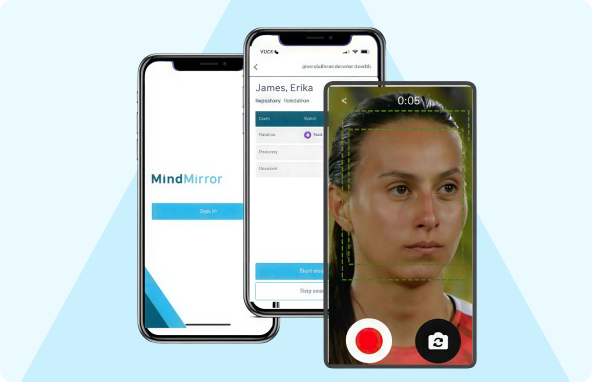
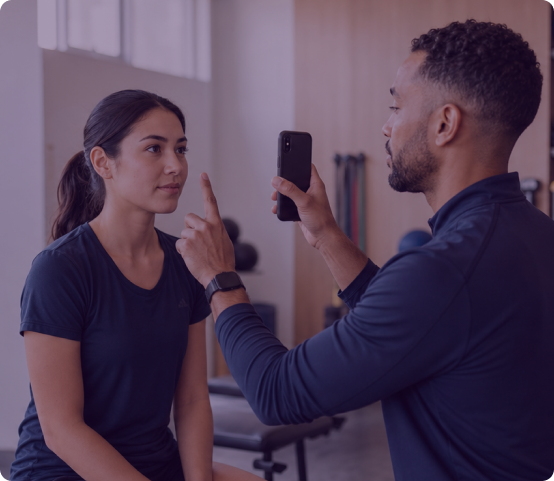
MindMirror is a digital health technology company advancing concussion and neurological assessment through AI-powered smartphone diagnostics. Using computer vision and machine learning, the platform analyzes subtle neurological indicators from a seven-second eye scan, delivering objective brain health insights without specialized hardware.

Built to overcome the limitations of traditional concussion evaluations, MindMirror combines years of clinical research with proprietary AI models trained on a unique neurological dataset.

AccelOne partnered with MindMirror for more than four years to design, build, and scale the platform, developing native mobile applications, AI-driven biomarker analysis, and cloud infrastructure for clinical data collection and processing.

The result is a smartphone-based assessment solution capable of generating objective neurological insights in approximately 30 seconds.

Turning Smartphones into Clinical Neurological Assessment Tools

Concussion assessment has long relied on symptom questionnaires and manual
evaluation, making results subjective and difficult to standardize.

MindMirror set out to answer a much harder question:

Can a standard smartphone deliver clinically meaningful neurological assessments without specialized hardware?

Solving that challenge required combining computer vision, AI, mobile engineering, and large-scale clinical data collection into a platform capable of detecting subtle neurological changes from a seven-second eye scan.

The difficulty wasn't just building the technology. Reliable concussion detection required collecting injury data within 24 hours of an incident, creating a highly specialized dataset that took years to build and validate.

Engineering an end-to-end AI Platform

AccelOne became MindMirror's long-term technology partner, working alongside the team for more than four years to design, build, and continuously improve the platform. The solution included:

Computer vision systems

RESULT 01

For real-time pupil detection and tracking.

AI models

RESULT 02

Analyzing 14 neurological biomarkers.

iOS and Android

RESULT 03

Native applications.

Cloud Infrastructure

RESULT 04

For clinical data collection and processing.

Tracking and analytics

RESULT 05

Longitudinal Recovery.

Model Training

RESULT 06

Continuous validation.

Engineering Highlights

Processing Clinical Signals on Consumer Hardware

The platform captures 210 image frames during a seven-second assessment. AccelOne developed computer vision models capable of detecting and tracking subtle pupil responses across different smartphone cameras, lighting conditions, and user populations.

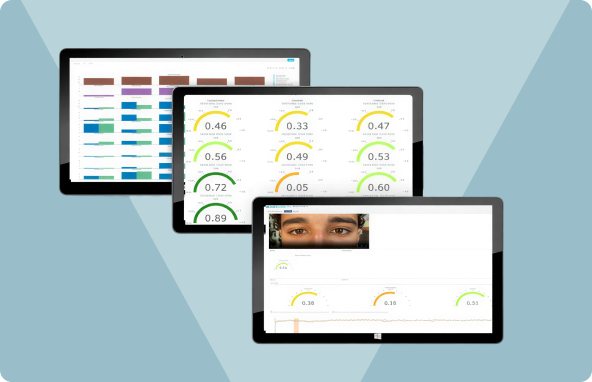
Those signals are analyzed through AI models that evaluate 14 neurological biomarkers associated with brain function and potential impairment.

Building a Proprietary Clinical Dataset

AI models are only as effective as the data behind them.
 
To support model training and validation, AccelOne built the infrastructure used to collect, process, and manage concussion data from schools, athletic organizations, universities, and military groups.

The resulting dataset became a critical foundation for model accuracy and continuous improvement.

Going Beyond Detection

The platform was designed not only to identify potential injuries but also to track recovery over time.

AccelOne developed the infrastructure required for repeated testing every 24 to 48 hours, enabling clinicians and trainers to monitor neurological recovery and make more informed return-to-play decisions.

Results & Impact

01
Reduced assessment time from 10–20 minutes to approximately 30 seconds.
02
Automated analysis of 14 neurological biomarkers.
03
Achieved a 98% correlation with medical-grade pupillometry devices.
04
Eliminated dependence on specialized diagnostic hardware.
05
Enabled smartphone-based recovery monitoring.
06
Created a proprietary dataset supporting continuous AI improvement.

Business Impact

What was once a specialist-dependent  clinical workflow can now be performed using a standard smartphone.

The platform expands access to objective neurological assessment while reducing operational complexity and deployment costs across:


01 Sport

Sports medicine programs

02 Military healthcare

Military healthcare organizations

03 GraduationCap

Educational institutions

04 Hospital

Hospitals and healthcare providers


By removing hardware barriers, MindMirror makes large-scale brain health assessment significantly more accessible.

Strategic Value

The technology foundation extends beyond concussion detection.

By combining validated AI models,  proprietary clinical datasets, and scalable infrastructure, MindMirror is positioned to expand into broader neurological  applications, including Parkinson's disease, Alzheimer's disease, autism spectrum disorders, and other cognitive health conditions.

This ongoing four-year partnership demonstrates how deep engineering collaboration can transform emerging scientific research into scalable, real-world healthcare technology.
"No one has come close to the quality and speed of what we've been able to get fromAccelOne."

Glenn Bowers, CEO, MindMirror

Frequently asked questions

How does MindMirror detect a concussion using a smartphone?
MindMirror uses a seven-second eye scan captured on a standard smartphone. Computer vision and AI models analyze 14 neurological biomarkers based on Pupillary Light Reflex (PLR), providing an objective assessment of potential neurological impairment in approximately 30 seconds.
What technology powers the MindMirror platform?
The platform combines computer vision, machine learning, native mobile applications, cloud infrastructure, and clinical data analytics. AccelOne developed the AI models, pupil tracking technology, mobile applications, and data infrastructure that enable neurological assessment on consumer devices.
How accurate is MindMirror compared to traditional concussion assessments?
Traditional concussion assessments often rely on subjective symptom reporting and clinician observation. MindMirror achieved a 98% correlation with medical-grade pupillometry devices, providing a more objective and consistent approach to brain health assessment.
What engineering challenges did AccelOne solve?
AccelOne developed computer vision models capable of tracking subtle pupil movements across different smartphone cameras, lighting conditions, and user populations. The team also built the infrastructure required to collect, process, and analyze large volumes of clinical data while supporting continuous AI model improvement.
Can MindMirror track recovery after a concussion?
Yes. The platform supports longitudinal monitoring through repeated assessments every 24 to 48 hours. Clinicians and trainers can track neurological recovery over time and make more informed return-to-play decisions based on objective biomarker trends.
What business outcomes did the platform achieve?
The solution reduced assessment time from 10 - 20 minutes to approximately 30 seconds, eliminated the need for specialized diagnostic hardware, expanded access to objective brain health assessment, and created a scalable foundation for future neurological screening applications.
What role did AccelOne play in the project?
AccelOne served as MindMirror's long-term technology partner, building the core mobile applications, AI and computer vision capabilities, cloud infrastructure, clinical data platform, and recovery tracking systems. The partnership has continued for more than four years as the platform evolves and expands into new neurological health applications.

Real outcomes, measurable impact

From FinTech to Government and Enterprise, we help organizations achieve faster delivery, higher quality, and sustainable innovation.

Explore more perspectives from AccelOne